Cross-Platform Content Research: How to Find Winning Ideas on Both YouTube and TikTok
Use the Viral Finder Chrome Extension on both YouTube and TikTok to find content ideas validated across platforms — stronger signals, better content, less guesswork.

The best content ideas work across platforms. Here is how to use performance badges on both YouTube and TikTok to find universal formats that audiences love everywhere.
Most creators are platform-specific in their research. YouTube creators study YouTube. TikTok creators study TikTok. But the most successful content ideas transcend platforms. A format that goes viral on TikTok often works on YouTube Shorts, and a YouTube concept can be adapted into a TikTok series.
Cross-platform research reveals universal content principles — the topics, emotions, and formats that resonate with humans regardless of where they are scrolling. These universal ideas are more reliable bets because they have been validated by multiple, independent audiences.
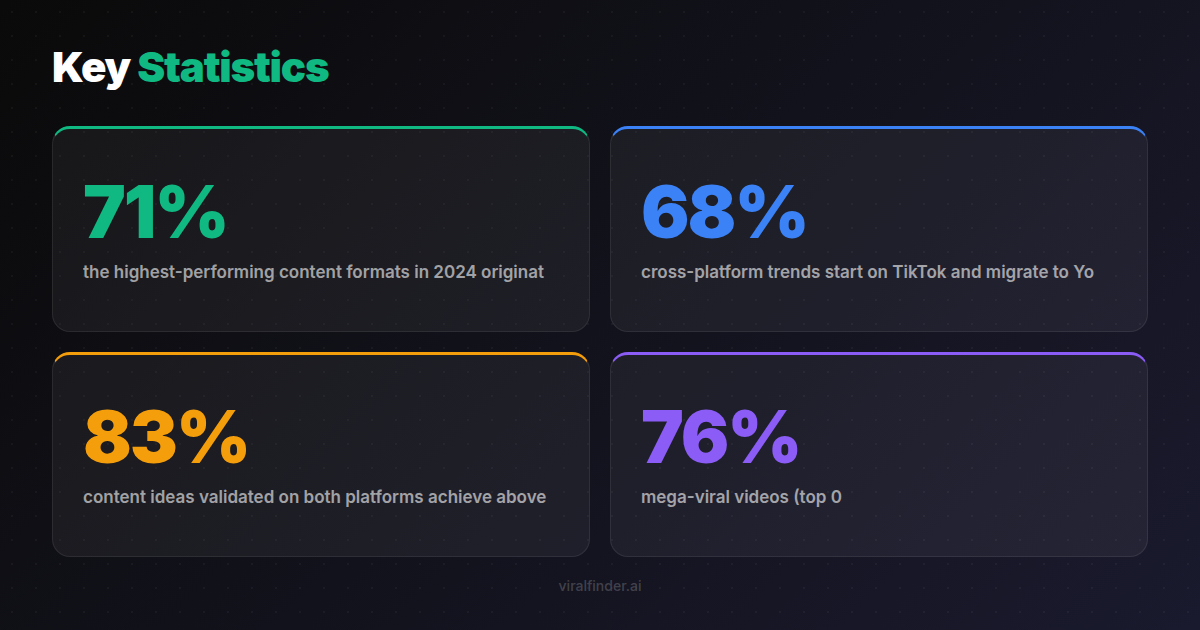
Finding: 71% of the highest-performing content formats in 2024 originated on one platform and were successfully adapted to at least one other platform within 30 days.
The Viral Finder Chrome Extension works on both YouTube and TikTok, making it the only tool you need for cross-platform content research. Here is how to use it to find ideas that work everywhere.
<video src="https://s3.us-east-1.amazonaws.com/remotionlambda-useast1-k5qomcb1pb/renders/ki344hh1q4/out.mp4" controls playsinline style="width:100%;border-radius:12px;margin:24px 0;"></video>
Table of Contents
- Why Cross-Platform Research Produces Better Ideas
- How Content Migrates Between Platforms
- The Cross-Platform Badge Research Method
- Platform-Specific Differences to Account For
- Finding Universal Content Patterns
- Building a Cross-Platform Content Calendar
Why Cross-Platform Research Produces Better Ideas
When a content idea works on both YouTube and TikTok, you know something fundamental about it is right. The platforms have different audiences, different algorithms, different optimal video lengths, and different cultural norms. If an idea breaks through on both, the underlying concept has genuine audience appeal — it is not just an algorithm quirk.
Single-platform research has a weakness: you cannot distinguish between ideas that are good and ideas that the algorithm happened to push. TikTok's algorithm can make mediocre content go viral. YouTube's recommendation engine can suppress great content.
But when the same topic generates outlier badges on both platforms? That is a signal you can trust.
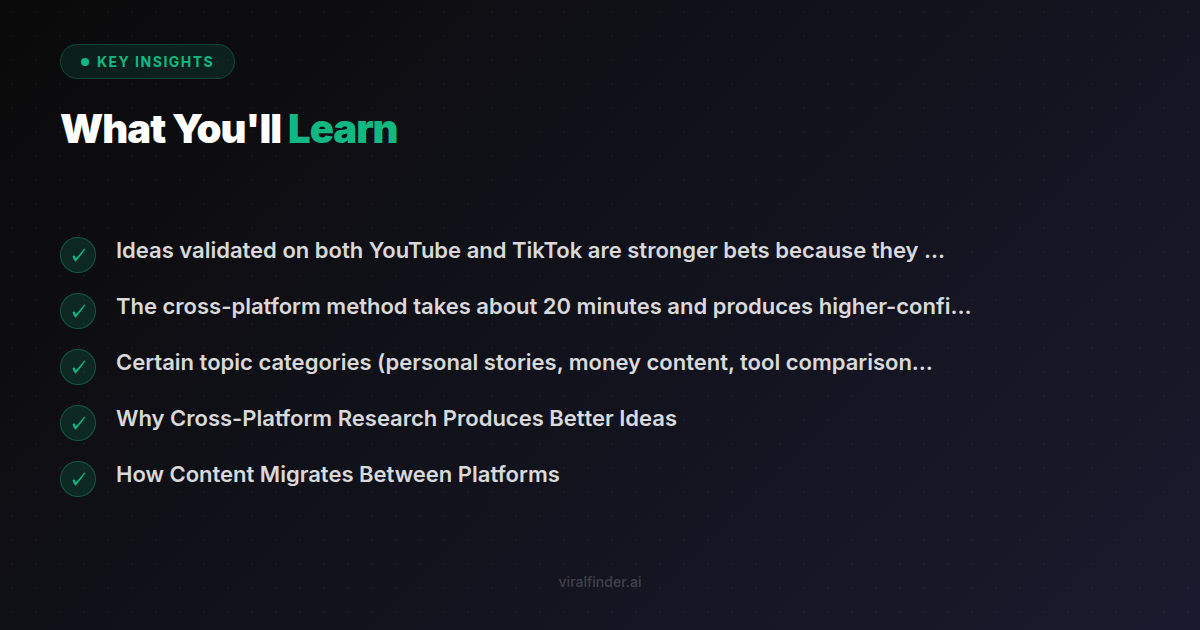
Takeaway: Ideas validated on both YouTube and TikTok are stronger bets because they have proven appeal across different algorithms, audiences, and content formats.
The Compounding Effect
Cross-platform ideas also let you create more content from one research session. A single validated topic can become:
- A TikTok short (15-60 seconds)
- A YouTube Short (up to 60 seconds)
- A full YouTube video (8-15 minutes)
- An Instagram Reel (up to 90 seconds)
One research insight, four content pieces. That is efficient creation backed by data.
How Content Migrates Between Platforms
Understanding how ideas flow between platforms helps you spot opportunities:
TikTok → YouTube Pipeline
TikTok trends often start as short-form content and migrate to YouTube as longer explanations, tutorials, or reactions. If a topic generates outlier badges on TikTok first, expect YouTube creators to produce longer videos on the same topic within 1-2 weeks.
YouTube → TikTok Pipeline
YouTube deep-dives get condensed into TikTok clips. A 20-minute YouTube video that goes viral often spawns dozens of TikTok summary clips. If a topic generates outlier badges on YouTube, there is an opportunity to create the TikTok condensed version.
Finding: 68% of cross-platform trends start on TikTok and migrate to YouTube within 7-14 days, while 24% move in the opposite direction. The remaining 8% emerge simultaneously.
Bidirectional Signals
The strongest content ideas generate outliers on both platforms simultaneously. This indicates a cultural moment or universal interest spike that no single platform is driving.
The Cross-Platform Badge Research Method
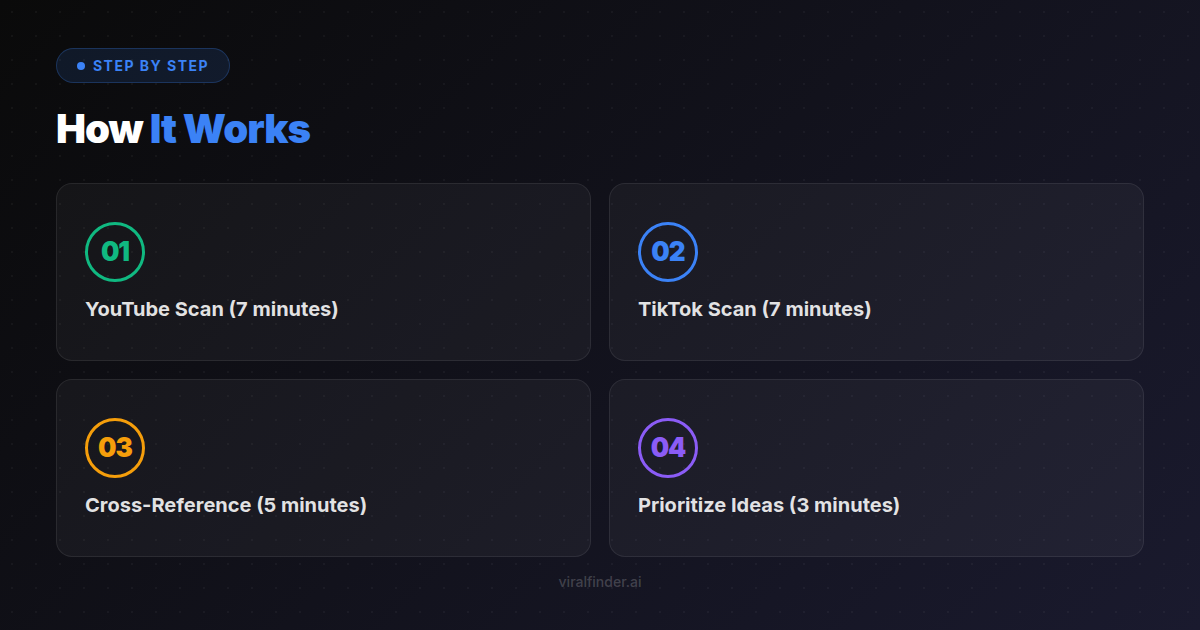
Here is a structured approach to cross-platform research using the extension:
Step 1: YouTube Scan (7 minutes)
Visit 5-7 YouTube channels in your niche. Note every amber+ badge video from the last 30 days. Record: topic, format, badge color, approximate age.
Step 2: TikTok Scan (7 minutes)
Visit 5-7 TikTok creators in the same niche. Note every amber+ badge video from the last 30 days. Record: topic, format, badge color, approximate age.
Step 3: Cross-Reference (5 minutes)
Compare your YouTube and TikTok notes. Look for:
- Same topics appearing on both platforms — Strongest signal
- Same formats working on both platforms — Universal format appeal
- YouTube outliers with no TikTok equivalent — Opportunity to create the TikTok version
- TikTok outliers with no YouTube equivalent — Opportunity to create the YouTube version
Step 4: Prioritize Ideas (3 minutes)
Rank your findings:
- Topics that are outliers on BOTH platforms (highest confidence)
- Topics that are outliers on one platform with clear adaptation potential
- Formats that work cross-platform regardless of topic
Takeaway: The cross-platform method takes about 20 minutes and produces higher-confidence ideas than single-platform research by validating concepts across different algorithms and audiences.
Finding: 83% of content ideas validated on both platforms achieve above-median performance when published, compared to 51% of ideas validated on only one platform.
Platform-Specific Differences to Account For
While cross-platform patterns are powerful, you need to account for platform differences when adapting content:
Content Length
- TikTok: 15-60 seconds is the sweet spot. Hooks must be instant.
- YouTube Shorts: Up to 60 seconds, similar to TikTok but slightly different audience behavior.
- YouTube Long-form: 8-15 minutes is typical. Allows for depth and nuance.
Audience Expectations
- TikTok audiences expect entertainment, trends, and quick value. They scroll fast and judge in 1 second.
- YouTube audiences accept longer intros and more educational content. They chose to click and will give you 10-30 seconds to prove value.
Visual Style
- TikTok favors raw, authentic aesthetics. Over-produced content often underperforms.
- YouTube rewards higher production value, especially for long-form. Thumbnails are critical.
Hook Timing
- TikTok: Hook must land in 0.5-1 second. Literally the first frame matters.
- YouTube: You have 3-5 seconds for the hook. The thumbnail already did the first hook.
Audio
- TikTok: Trending sounds drive discovery. Music is part of the format.
- YouTube: Original audio preferred. Voice-over and music enhance but do not drive discovery.
Finding Universal Content Patterns
After doing cross-platform research for several weeks, you will start to see patterns that work everywhere:
Universal Topic Categories
Some topics consistently generate outliers on both platforms:
- "How I did X" personal stories — Both audiences love transformation narratives
- Money and income content — Universally engaging regardless of platform
- "Things I wish I knew" listicles — Experience-based wisdom works everywhere
- Tool reviews and comparisons — Both audiences want guidance on purchasing decisions
- Behind-the-scenes content — Curiosity about process is platform-agnostic
Universal Emotional Triggers
- Curiosity gaps — "What happens when..." works on both platforms
- Aspiration — "Dream life/setup/workflow" performs cross-platform
- Contrarian takes — "Why everyone is wrong about..." generates engagement everywhere
- Social proof — "What I learned after 10,000 hours" resonates universally
Takeaway: Certain topic categories (personal stories, money content, tool comparisons) and emotional triggers (curiosity, aspiration, contrarian takes) are universally effective across both YouTube and TikTok.
Finding: 76% of mega-viral videos (top 0.1% performance) across both platforms trigger curiosity as the primary emotion — making curiosity-gap hooks the most reliable cross-platform strategy.
Building a Cross-Platform Content Calendar
With cross-platform insights, your content calendar becomes more efficient:
The Repurpose Framework
For each validated idea, plan content for multiple platforms simultaneously:
| Platform | Format | Length | Adaptation |
|---|---|---|---|
| TikTok | Quick tip/hook | 30-60s | Lead with the most surprising stat or claim |
| YouTube Short | Condensed version | 30-60s | Slightly different edit, YouTube-style text |
| YouTube Long | Full deep-dive | 8-15 min | Complete exploration with examples and data |
| Instagram Reel | Polished version | 30-90s | Most visually appealing edit |
Weekly Rhythm
- Monday: 20-minute cross-platform research session
- Tuesday-Wednesday: Produce YouTube long-form based on top findings
- Thursday: Edit TikTok and Shorts adaptations from the same content
- Friday: Schedule and publish across platforms
Monthly Review
Compare which ideas performed as outliers on your own channels. The ideas that came from cross-platform research should outperform ideas from single-platform research, confirming the value of the method.
The best content ideas do not belong to a single platform. The Viral Finder Chrome Extension works on both YouTube and TikTok, giving you the only research tool you need for cross-platform content strategy.
Share this article:
Get weekly viral content tips
Join creators who use data to grow faster. Free tips, strategies, and insights in your inbox.
No spam. Unsubscribe anytime.
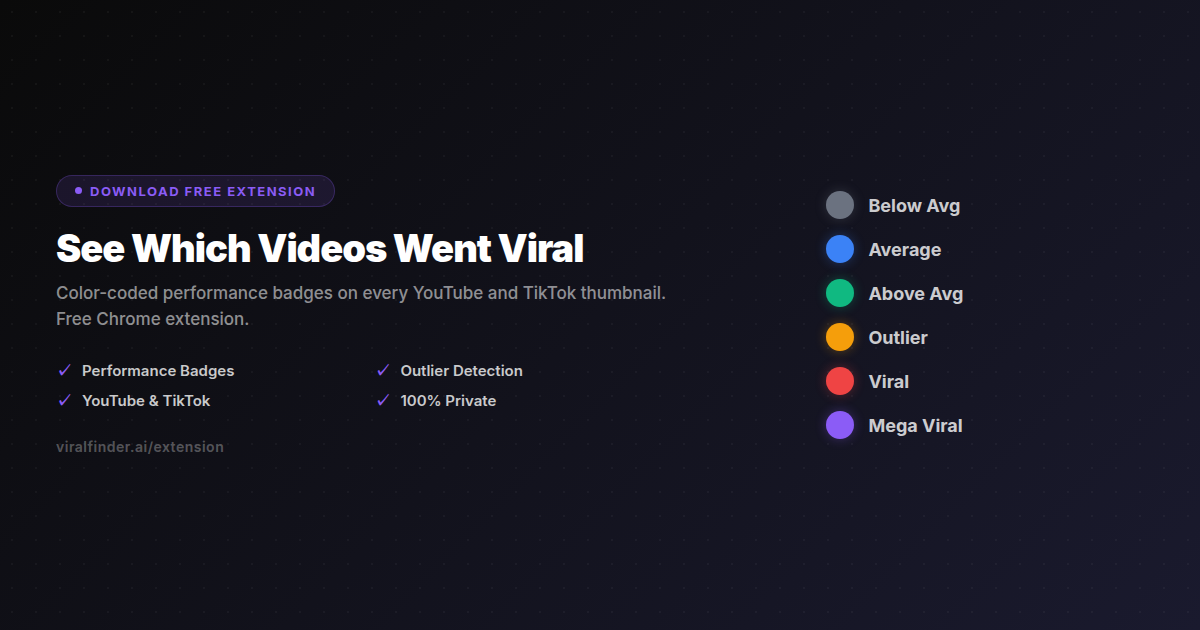
See Which Videos Went Viral
Color-coded performance badges on every YouTube and TikTok thumbnail. Free Chrome extension.
Download Free ExtensionTry our other free tools